


What is decentralized cryptocurrency?
- Crypto In A Nutshell

- Nov 1, 2020
- 4 min read
If you are interested in cryptocurrencies like Bitcoin or Litecoin, only a very small percentage of you have not heard of centralization and decentralization. They are the most important features of a cryptocurrency. Centralized and decentralized currency in the crypto community has been a heated debate for a long time that this medium has existed. However, it seems that decentralized cryptocurrency has overtaken centralized currency as its name has grown in popularity. So does decentralized cryptocurrency really work?

What is Centralized Cryptocurrency?
By definition, centralization is "the concentration that controls an activity or an organization under a single body of power". In the world of centralized currency, a centralized cryptocurrency is a currency controlled by a single entity, usually by the institution that originally founded it or the central bank of the country.
Because the currency is under the control of this single entity, this creates more stability in the currency as it is completely controlled by the entity in question. All monetary decisions, such as whether to increase or decrease the supply, are based on their decisions made in accordance with their goals. They are also the ones who set prices and decide where and how currencies are traded.
An example of this in the real world would be the bonus points you get from different merchants for becoming loyal customers. These currencies can only be spent with one company and are therefore centralized.
However, in the crypto space, the idea of centralization is not favored by the majority of the crypto community because crypto miners face mining restrictions, and traders may face governance issues of the issuer. But on the contrary, more stability can be expected because the currency is controlled primarily by a single entity.
What is decentralized cryptocurrency?
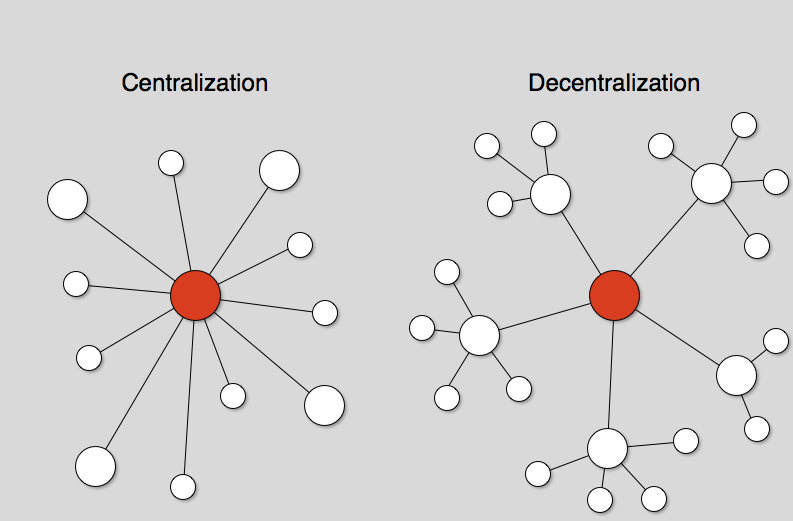
Wikipedia provides us with a broad initial definition of decentralization: the process of distributing and dispersing functions, powers, people or things out of central or authority.
In the context of blockchain technology and cryptocurrencies, what can decentralization mean?
The main idea associated with all decentralized systems is that they cannot be controlled by any authority. This makes them more democratic in nature, and that means you don't have to worry about an organization that might make off with your funds or that the system will be shut down by outside interference.
Decentralized cryptocurrencies follow the same rules we talked about. It is against central authority control. That means if you are holding a currency like Bitcoin or Monero in a personal wallet, it cannot be taken or seized by an outside authority or even the developers of those currencies themselves. You can store your funds knowing that they are secure as long as you protect your private keys.
A decentralized currency does not have a single entity that determines all aspects of money. Cryptocurrencies are a great example of decentralization.
Decentralized currencies are very popular in the world of cryptocurrencies. When Satoshi Nakamoto created his fully decentralized Bitcoin in 2009, it was difficult for him to imagine its impact on the world and its financial system. Traders are fascinated by the idea of a decentralized currency due to the extra control they have over the currency during its many stages of development and trading, due to the fact that it is operated by countless people, not an individual or a company. Examples of this in the crypto world are Ethereum, BitCoin, LiteCoin and many others.

Benefits of Decentralized Cryptocurrency
There are several key advantages of decentralized currency, and here are some:
Low fees
Transferring money through traditional banking systems can be really expensive. Banks and credit card processing companies charge huge fees for their services. However, with decentralized currencies, payments are borderless and inexpensive.
There is no third party
You are your money owner. You can keep it in your wallet and use it as you like. There is no third party involved like the bank you need to trust.
Fast payment
Because there's no middleman or third party, crypto payments are quick. Blockchain technology essentially eliminates delays, fee payments, and a host of other third-party approvals that may have been present. Due to the peer-to-peer nature of the network, resolution is immediate and can be accomplished in a fraction of the time and expense that it would have taken a traditional transfer.
High security
All your transactions will be secure as it uses NSA-generated cryptography. It is not possible for anyone other than the owner of the wallet to make any payments from the wallet.
Anonymous
Some coins can keep you anonymous but contrary to popular belief, not all of them can. People will not know exactly who you are on the blockchain but they can get some information from it.
Identity Theft
When you give your credit card to a merchant, you give that person access to your full credit line, even if the transaction is a small amount. Credit cards work on a "pull" basis, in which the store initiates a payment and retrieves the specified amount from your account. Cryptocurrencies use a "push" mechanism that allows crypto holders to send exactly what they want to the seller or recipient without additional information.
Easy Access
With cryptocurrencies, anyone can have access. You may not need a business account or withdrawal software, you just need a mobile phone and internet to get started.
REFERENCES
Krassowski, A. (2018, March 08). What does Decentralization mean? Retrieved November 13, 2020, from https://medium.com/@dappsec/what-is-decentralization-3467e40ce899
What is a Decentralized Currency? (2018, September 11). Retrieved November 13, 2020, from https://captainaltcoin.com/what-is-a-decentralized-currency/
Mag, G. (2018, November 14). Centralized vs Decentralized Currency: Is DasCoin's Hybrid model better? Retrieved November 13, 2020, from https://www.globalbankingandfinance.com/centralized-vs-decentralized-currency-is-dascoins-hybrid-model-better/
Jain, T. (2020, April 20). Centralized Vs Decentralized Cryptocurrency: What is Centralized Power. Retrieved November 13, 2020, from https://www.cryptoknowmics.com/news/centralized-vs-decentralized-cryptocurrency/


Comments